
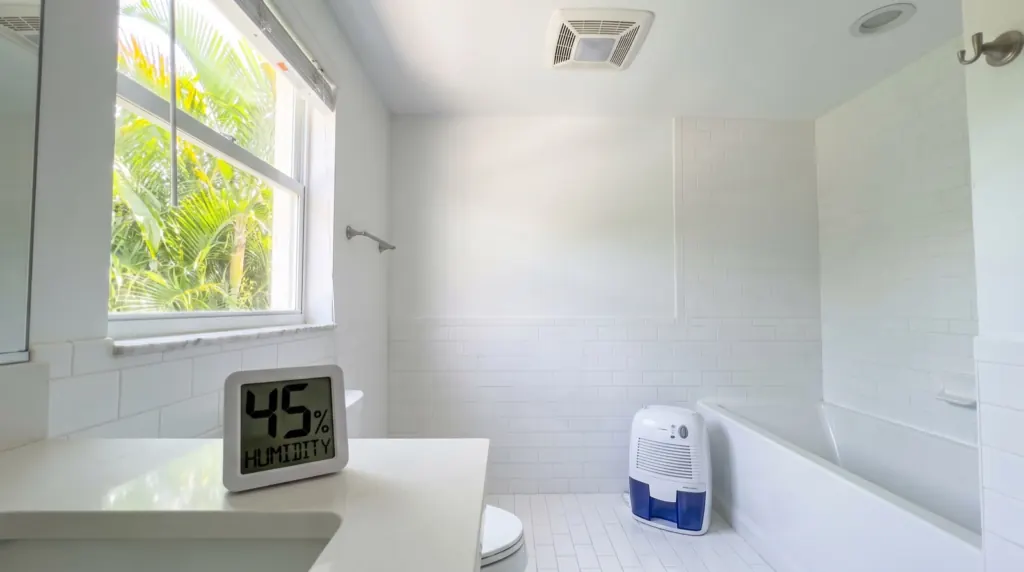
The key to mold is moisture control. The EPA recommends keeping indoor relative humidity below 60%, ideally between 30% and 50%. Dry any wet materials within 24 to 48 hours, run bathroom and kitchen exhaust fans, and fix leaks quickly. Small areas of mold on hard surfaces (under about 10 square feet) can be scrubbed off with detergent and water. Larger areas, or mold after sewage or flood water, call for a professional.
Mold needs three things: a food source (drywall, wood, dust, soap scum), mild temperatures, and moisture. In South Florida the first two are always present, so moisture is the one you control. We'll walk you through what the EPA recommends, plus what works in the homes we clean.
Step 1: Know your indoor humidity
The EPA recommends keeping indoor relative humidity below 60%, ideally between 30% and 50%. A basic hygrometer costs about $10 to $50 and takes the guesswork out. Check a bathroom, a bedroom closet and the main living area, since humidity varies from room to room.
If you're regularly above 60%:
- Run your air conditioning. AC removes moisture as it cools.
- Add a dehumidifier in problem areas such as closets, laundry rooms and guest rooms that stay closed.
- Keep doors to closed-off rooms open sometimes so air circulates.
Step 2: Get rid of moisture where it starts
- Bathrooms: run the exhaust fan or open a window when showering, and leave the fan on for a while afterward.
- Kitchen: use the range hood or open a window when cooking or running the dishwasher.
- Laundry: vent the clothes dryer to the outdoors.
- Condensation: if water collects on windows, walls or pipes, dry it quickly. It's a sign of high humidity. Insulating cold water pipes helps.
- AC system: keep drip pans clean and drain lines clear. Clogged lines are a common source of hidden water.
- Outside: keep gutters clean and make sure the ground slopes away from the foundation.
Step 3: Follow the 24 to 48 hour rule
When something gets wet from a leak, a spill or a storm, the EPA says to dry water-damaged areas and items within 24 to 48 hours. Mold often won't grow if you do. Fans, AC and a dehumidifier speed things up. Fix the source of the water too, or the mold will come back.
Step 4: Clean small spots the right way
For mold on hard surfaces like tile, a tub or a window sill:
- Fix the moisture problem first.
- Wear gloves and goggles. The EPA suggests considering an N-95 respirator.
- Scrub the mold off with detergent and water.
- Dry the surface completely.
About bleach: the EPA does not recommend bleach as a routine mold cleaner. If you do use a disinfectant, ventilate the room, and never mix bleach with ammonia or other cleaners. The combination can produce toxic fumes.
Don't paint or caulk over moldy surfaces. Paint applied over mold is likely to peel, and the mold stays underneath.
When to call a professional
The EPA says to bring in a professional when:
- The moldy area is larger than about 10 square feet (roughly 3 ft by 3 ft).
- There has been significant water damage, or the water was sewage or otherwise contaminated.
- You suspect mold in the heating or AC system. Don't run it until it's checked.
- Someone in the home has health concerns. Talk to a health professional first.
Note that mold remediation is specialized work. A cleaning company like Casabela helps prevent mold through regular cleaning of bathrooms, grout, window sills and AC vents, but large mold problems belong with a remediation specialist.
How regular cleaning helps
Soap scum, dust and body oils feed mildew. Regular bathroom cleaning, wiping shower glass and grout, dusting vents, and keeping window tracks clean remove the food mold needs. During our visits we also point out anything that looks like a moisture problem, such as a dripping supply line or a stained ceiling tile, so you can deal with it early.
Sources
- U.S. Environmental Protection Agency, “A Brief Guide to Mold, Moisture and Your Home.” epa.gov/mold
- Centers for Disease Control and Prevention, “Homeowner's and Renter's Guide to Mold Cleanup After Disasters.” cdc.gov
Frequently asked questions
What humidity should I keep my Florida home at?
The EPA recommends below 60% relative humidity, ideally between 30% and 50%. An inexpensive hygrometer, usually $10 to $50 at a hardware store, tells you where you are.
Should I use bleach to kill mold?
The EPA doesn't recommend bleach as a routine way to clean mold. Scrub hard surfaces with detergent and water and dry them completely. Never mix bleach with ammonia or other cleaners because toxic fumes can form.
How big a mold problem can I clean myself?
The EPA says homeowners can usually handle an area under about 10 square feet, roughly 3 feet by 3 feet. Bigger areas, mold from sewage or contaminated water, or mold in the AC system call for a professional.
Can I paint over mildew?
No. Paint or caulk applied over mold is likely to peel. Clean and fully dry the surface first.
Want us to take a look at your space?
Book a free walkthrough. We'll come to you, see what you need and send a clear written quote. No cost and no pressure.