
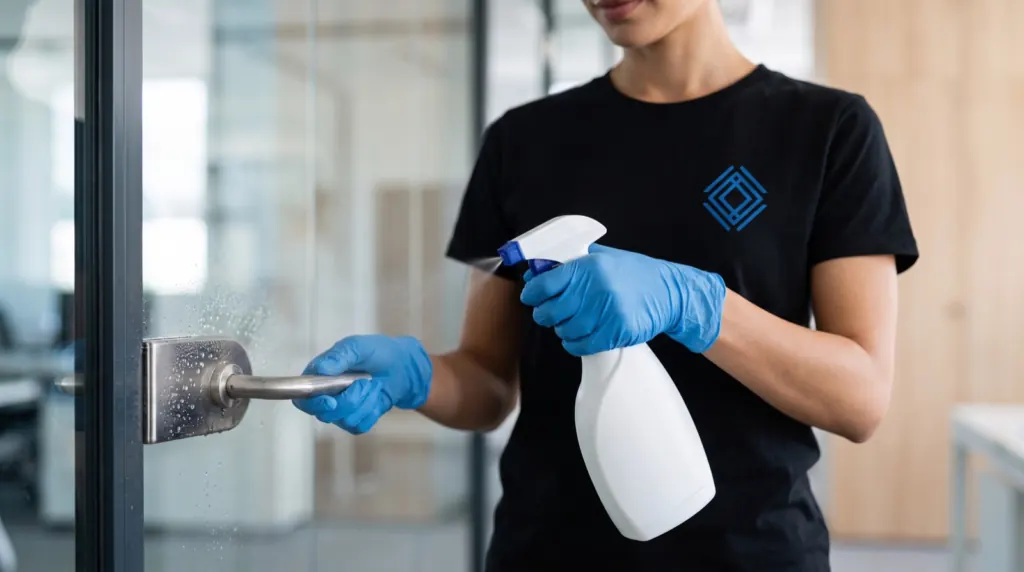
Cleaning removes dirt and most germs with soap or detergent. Sanitizing reduces the germs left after cleaning, and EPA-registered sanitizers target bacteria, not viruses. Disinfecting kills the germs listed on the product label, but only if the surface was cleaned first and stays wet for the full contact time on the label. Most offices need routine cleaning everywhere, plus disinfection of high-touch surfaces and areas where someone has been sick.
“Disinfect everything” sounds safe, but it isn't how disinfection works, and it can waste time and money. We follow what the CDC and EPA actually say, and we'll walk you through it so you know what your office, school or clinic really needs.
The three terms, defined
The order matters: clean first
Disinfectants are made to work on germs, not grime, and dirt left on a surface gets in the way. That is why CDC describes disinfecting as killing the germs that remain after cleaning. Unless a product's label says it cleans and disinfects in one step, clean first.
Contact time: the step most people skip
Every disinfectant label lists a contact time (also called dwell time), and it varies by product and by germ. The surface must stay visibly wet for the entire contact time. If it dries early, apply more. Spraying and wiping right away usually doesn't meet the label.
How to read the label
- Find the “EPA Reg. No.” The EPA says that number, not the brand name, is how to identify a product.
- Check that the label lists the germs you're concerned about.
- Note the contact time for those germs and the surfaces the product is approved for.
- Follow the label's safety directions: ventilation, gloves and eye protection.
What an office actually needs
- Routine cleaning everywhere: floors, desks, breakrooms and restrooms on a schedule.
- Regular attention to high-touch surfaces: CDC notes these are more likely to spread germs. Think door handles, light switches, faucets, elevator buttons, shared equipment and breakroom appliances.
- Disinfection where it matters: restrooms, high-touch surfaces on a set schedule, and anywhere someone has been visibly ill.
- Sanitizing food-contact surfaces in breakrooms and kitchens, with a product approved for food-contact use.
Safety basics
- Never mix products. CDC warns it can be hazardous and change their chemical properties.
- Ventilate. Open windows or run fans or HVAC to increase air circulation.
- Wear the protective equipment the label calls for, such as gloves and goggles.
- Use electronics-safe products on keyboards, phones and screens.
How Casabela handles disinfection
We clean first, use EPA-registered disinfectants suited to each surface, keep them wet for the label's contact time, and never mix products. For medical and dental offices we match your practice's required products and protocols. See our disinfection services.
Sources
Frequently asked questions
Do I need to disinfect my office every day?
Not necessarily. CDC guidance is to clean high-touch surfaces regularly and disinfect when someone has been ill or when there's a specific risk. Many offices disinfect restrooms and the highest-touch surfaces on a set schedule.
What is contact time or dwell time?
It's how long a disinfectant must stay wet on a surface to kill the germs listed on its label. If the surface dries early, apply more product. It varies by product and by germ.
How do I know a disinfectant is EPA-registered?
Look for “EPA Reg. No.” on the label. The EPA says the registration number, not the brand name, is how to identify the product.
Can I mix cleaning products to make them stronger?
No. CDC warns that mixing products can be hazardous. Bleach mixed with ammonia, for example, releases toxic gas.
Want us to take a look at your space?
Book a free walkthrough. We'll come to you, see what you need and send a clear written quote. No cost and no pressure.