
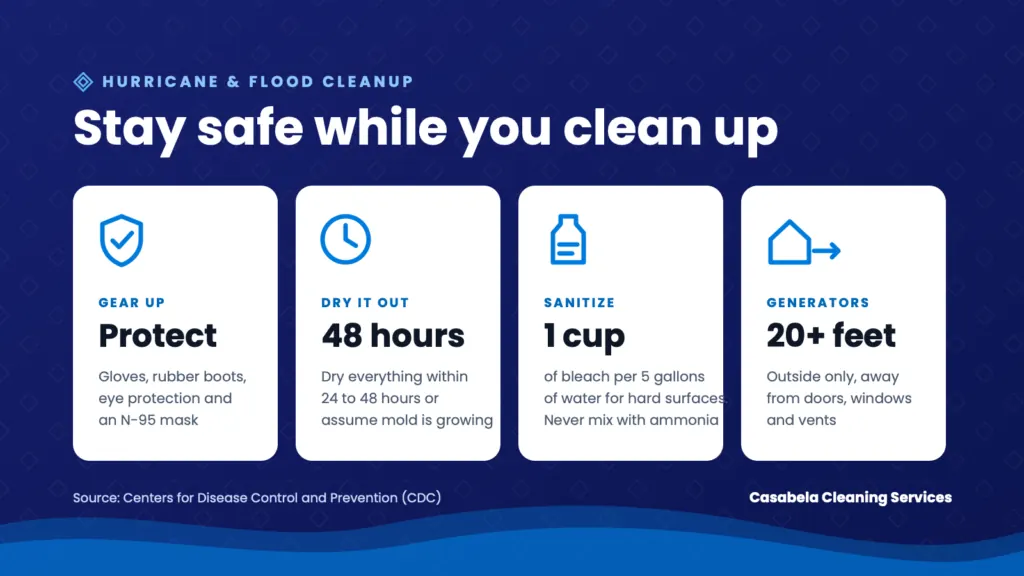
Wait until officials say it's safe to go back in. Then wear gloves, waterproof boots, eye protection and at least an N-95 respirator where mold is possible. Dry your home within 24 to 48 hours if you can, throw out soaked porous items you can't clean and dry, and sanitize hard surfaces that touched floodwater with 1 cup of regular unscented bleach per 5 gallons of water. Never mix bleach with ammonia, and never run a generator indoors or within 20 feet of windows, doors or vents.
Hurricane season in Florida runs from June 1 through November 30. When a storm brings water into your home, the first days of flood cleanup matter most. We live here too, so we put together what the CDC recommends to help you clean up safely and know when it's a job for the pros.
Before you start: is it safe to go in?
- Wait until local officials or professionals say it's safe to re-enter. Watch for structural damage, downed power lines and gas smells.
- If your home flooded, don't turn on electrical systems until an electrician has checked them.
- Take photos and video of all damage before you clean or throw anything out. Your insurance company will want them.
Wear the right protective gear
Floodwater can carry sewage, chemicals and bacteria, and mold can start growing quickly. The CDC recommends:
- Rubber or other non-porous boots, gloves and eye protection
- At least a NIOSH-approved N-95 respirator wherever mold is present or suspected
- A reusable half-face or full-face respirator if you'll spend more than about 4 hours removing moldy material like drywall
Children shouldn't help with cleanup. Respirators aren't designed for kids.
Dry everything out within 24 to 48 hours
The CDC says to clean up and dry your home as quickly as possible, within 24 to 48 hours. If you couldn't dry the home and its contents in that window, assume mold is growing. Open doors and windows when it's safe, run fans, and once power is back, use AC and dehumidifiers.
What to throw away
CDC's rule of thumb is “when in doubt, take it out.” Remove porous items that were soaked by floodwater and can't be thoroughly cleaned and dried, including:
- Carpet and carpet padding, rugs
- Mattresses, pillows and upholstered furniture
- Drywall, insulation, and ceiling and floor tiles that got wet
- Paper, books, and food that touched floodwater
- Wooden cutting boards, baby bottle nipples and pacifiers
Clean, then sanitize hard surfaces
Wash hard surfaces with soap and water first, rinse, then sanitize. CDC's bleach ratios, using regular unscented household bleach with 5% to 9% sodium hypochlorite:
Never mix bleach with ammonia or any other cleaner. Open windows and doors for fresh air while you work, and read the product label.
Generator and carbon monoxide safety
Carbon monoxide poisoning is a serious risk after storms, when many homes run generators. The CDC says to never use a generator inside your home or garage, even with doors and windows open, and to run it outdoors more than 20 feet from windows, doors and vents. Make sure your CO alarms have working batteries.
When to call professionals
Flood-damaged homes with standing water, sewage backup, large areas of mold or wet drywall need a licensed water-damage restoration or mold remediation company. Once that work is done and the home is dry and safe, a cleaning company can take over the detailed cleaning of floors, cabinets, fixtures and furniture so you can move back in. That's where Casabela can help.
Sources
- CDC, “How to Safely Clean and Sanitize with Bleach.” cdc.gov
- CDC, “Homeowner's and Renter's Guide to Mold Cleanup After Disasters.” cdc.gov
- CDC, “What You Can Do to Protect Your Respiratory Health During Disaster Cleanup.” cdc.gov
- CDC, “Carbon Monoxide Poisoning Basics.” cdc.gov
- National Hurricane Center (NOAA): Atlantic hurricane season runs June 1 to November 30. nhc.noaa.gov
Frequently asked questions
What bleach ratio does the CDC recommend after a flood?
For hard household surfaces that don't absorb water (floors, sinks, some toys and tools), 1 cup of regular unscented bleach per 5 gallons of water. For food-contact surfaces like countertops and plates, 1 tablespoon per gallon. For mold on hard surfaces, 1 cup per gallon. Use bleach with 5% to 9% sodium hypochlorite.
What should I throw away after a flood?
CDC advises removing porous items that were wet with floodwater and can't be cleaned and dried completely within 24 to 48 hours, such as carpet and padding, mattresses, upholstered furniture, pillows, drywall, insulation, paper and food. When in doubt, throw it out.
How far should a generator be from my house?
CDC says to operate generators outdoors more than 20 feet from windows, doors and vents, and never inside a home or garage, even with doors and windows open.
Should kids help with storm cleanup?
No. CDC says children should not take part in disaster cleanup work, and respirators are not designed for children.
Want us to take a look at your space?
Book a free walkthrough. We'll come to you, see what you need and send a clear written quote. No cost and no pressure.